
In an era defined by rapid global shifts and digital interconnectivity, the necessity for a scientifically grounded and spiritually anchored approach to Islamic outreach has never been more vital. Guided by the Divine command to invite others to the path of Allah with wisdom and beautiful preaching, the Nigerian Muslim Community in Qatar organized a landmark educational program at the beginning of 2026. This seminar served as a critical platform for expatriates to refine their understanding of the Prophetic mission within a modern context.
Event Logistics and Strategic Context
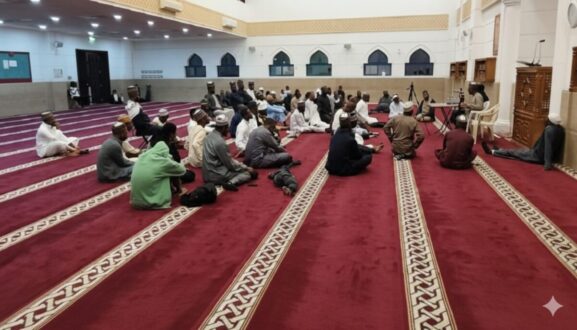
The seminar, titled “Calling to Allah and the Provision of the Da’iyah,” was held on Friday, January 30, 2026, at the Sheikh Abdulla Bin Zaid Al Mahmoud Islamic Cultural Center (Fanar) in Doha, Qatar. As a hub for cross-cultural dialogue, Fanar provided the perfect environment for the Nigerian Muslim Community in Qatar to gather and learn.
Under the expert guidance of the esteemed scholar Sheikh Abdul-Rafi’ Al-Imam, the program aimed to empower the Nigerian diaspora with the spiritual and academic tools necessary to represent Islam authentically. In the multicultural landscape of Doha, such programs are essential for ensuring that the community acts as a positive and cohesive force within the wider Qatari society.
Defining Dawah in the Modern Age
Sheikh Abdul-Rafi’ Al-Imam opened the discourse by redefining Dawah as a comprehensive lifestyle rather than a localized task. For members of the Nigerian Muslim Community in Qatar, Dawah is not limited to formal speeches but is manifested in every interaction.
The Sheikh explored the unique role of Muslim expatriates as “ambassadors of Islam.” He argued that in a diverse society, one’s character, professional integrity, and kindness serve as a silent yet powerful invitation to the faith. This perspective shifts the responsibility of outreach from a few specialists to the entire community, making every individual a living example of Islamic values.
The “Zad” (Provision): Four Pillars of the Da’iyah
The core of the seminar focused on the Zad—the essential spiritual and intellectual “fuel” required to remain steadfast in the mission of calling others to Allah. The Sheikh outlined four critical provisions:
- Sincerity (Ikhlas) as the Primary Engine: The foundation of all effort must be the seek the pleasure of Allah alone. Sincerity ensures that the caller’s words resonate with the hearts of others and protects the individual from the spiritual diseases of vanity or the pursuit of public acclaim.
- Grounded Sharia Knowledge: A caller without knowledge is like a traveler attempting to navigate a dark path without a light. The Nigerian Muslim Community in Qatar was reminded that a Da’iyah must possess a deep, evidence-based understanding of the Quran and Sunnah to ensure the message delivered is doctrinally sound and authentic.
- Patience and Perseverance (Sabr): The path of invitation is often met with social pressure or indifference. Patience is the pillar that prevents burnout. It involves steadfastness in obedience and resilience when facing the hardships inherent in sharing a message that may challenge prevailing norms.
- The Power of Example (Qudwah): The Sheikh underscored a profound truth: the actions of one person are often more influential than the words of a thousand. Honesty, ethics, and mercy are the fastest vehicles for the message of Islam.
The Jurisprudence of Priorities and Reality
A significant portion of the report highlights the concept of Fiqh al-Waqi’—the jurisprudence of contemporary reality. The Nigerian Muslim Community in Qatar was encouraged to adopt a strategic approach to outreach that prioritizes:
- Wisdom in Addressing Capacity: Speaking to people according to their intellectual and cultural backgrounds.
- Focus on Fundamentals: Prioritizing the core beliefs (Usul) before addressing secondary or peripheral issues (Furu’).
- Digital Engagement: Leveraging modern technology and social media platforms to spread the message of peace and truth to a global audience.
Key Recommendations for the Nigerian Diaspora
The seminar concluded with actionable steps to sustain the program’s impact:
- Educational Intensification: Foundational courses for youth interested in voluntary Dawah work.
- Multilingual Content: Producing digital content in Hausa and English to reach the wider Nigerian diaspora.
- Institutional Collaboration: Strengthening ties between expatriate communities and official Qatari institutions to unify the Islamic discourse.
Conclusion: Dawah as a Collective Responsibility
The program organized by the Nigerian Muslim Community in Qatar at the Fanar Center reflects a deep awareness of the civilizational role of Muslims living abroad. Sheikh Abdul-Rafi’ Al-Imam successfully identified that the modern challenge is not a lack of preachers, but a need for better “provision” and preparation.
Commitment to knowledge, sincerity, and an understanding of our current reality are the three pillars upon which a solid Dawah structure is built. The insights from this seminar will remain a guiding light for the community, serving as a reminder that the invitation to Allah is a sacred responsibility shared by the entire Ummah.
By Musa A. Mosiudi
