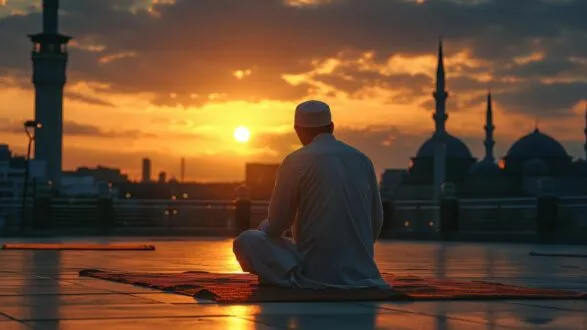
The Concept of Peace in Islam is a comprehensive philosophy that governs every aspect of human life, revolving around safety, security, and kind treatment. Linguistically, the word peace (Salam) carries shades of meaning that include security, freedom from defects, and perfection. In the Islamic worldview, peace is the essential state, while war is viewed as an abnormal and foreign state of affairs.
1. Comparing Perspectives on Peace
The definition of peace varies significantly across different societies and academic disciplines:
- The Biblical View: In the Bible, peace is often referred to as an external quality providing social security or a limited spiritual peace brought by Jesus, which differs from the comprehensive Islamic meaning.
- The Military/Sociological View: For military personnel, peace is simply the opposite of war; for sociologists, it refers to the state of leading a calm life.
- The Islamic View: In Islam, peace is a comprehensive state of complete harmony between all senses, striking a balance between internal and external engagements.
2. The Four Dimensions of Peace
Islamic terminology identifies four distinct but interrelated concepts that define a peaceful society:
- Amn (Safety): Defined as the absence of fear, turmoil, and terror where everyone lives a life without fear of being attacked, robbed, or persecuted. Makkah is described as a “City of Peace” (Amn).
- Silm (Submission): This denotes complete surrender and submission to the rules and regulations of Islam. The Quran commands: “O you who believe! Enter perfectly in Islam [Silm]…”.
- Salām (Perfection): One of the Divine Names of Allah (As-Salām), signifying the “Source of Peace”. It implies soundness, preservation, and freedom from defects.
- Şulh (Reconciliation): The active process of peace-making and ending hatred between people.
3. Scriptural Evidence for Social Harmony
The Quran and Hadith emphasize that the concept of peace in Islam is maintained through love, justice, and the fulfillment of rights.
- Love as Faith: A Muslim is not a true believer unless he loves the rest of creation.
- The Sanctity of Life: Taking the life of one innocent being is as if the whole of mankind has been killed.
- Defining a Muslim: A true Muslim is one from whose hand and tongue others are safe and secure.
- Inherent Nature: Every child is born on Al-Fitrah (true faith), coming into this world free and with peace.
4. The Rules of Şulh: Conflict Resolution and Justice
When conflict arises, Şulh (peace-making) becomes a primary religious duty.
- Prioritizing Settlement: The Quran explicitly teaches that “reconciliation is always best” (wa al-şulh khayr).
- Justice in Mediation: If two parties fight, the community must intervene to make peace between them justly and equitably.
- Ethics of Mediation: Great rewards are promised to those who seek conciliation between mankind to please Allah. It is even permissible to say good things (softening the truth) to reconcile two parties.
- Breaking Oaths for Peace: It is unlawful to use an oath as an excuse to avoid making peace; one must break the oath and do the right thing for reconciliation.
5. Internal Peace and Tranquility (Sakīnah)
Beyond societal peace, Islam focuses on Sakīnah, the internal calmness that descends upon a believer.
- Divine Assurance: Allah sends As-Sakīnah into the hearts of believers to grow their faith.
- The Role of the Quran: Tranquility and the company of angels descend upon those who recite the Quran.
- Harmony with Nature: All objects in the universe follow a law of submission to Allah, keeping the cosmos in a state of peace.
6. Conclusion: The Modern Challenge of Peace
In the modern world, the concept of peace in Islam is often obscured by campaigns of misinterpretation. However, the core teachings remain: peace is not merely the absence of violence but exists when everyone in society receives their due and grievances are redressed. By following the “Way of Peace” (al-Islam), humanity can establish a social order rooted in universal brotherhood, human dignity, and justice.
