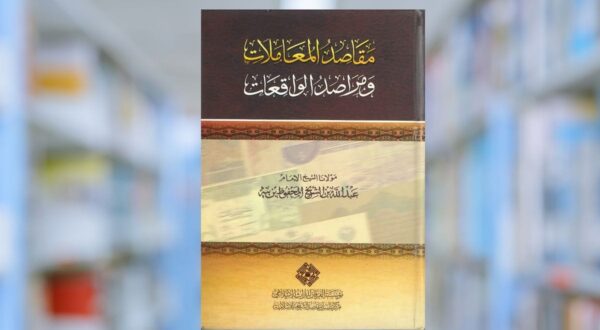
The scholarly discourse on Money: Between Ownership and Function is a cornerstone of modern Islamic finance. In his book Maqasid al-Mu’amalat, Sheikh Abdullah bin Bayyah explores how wealth transitions from a private right to a social responsibility.
Technical Definitions of Money (Mal) in Islamic Fiqh
Understanding Money: Between Ownership and Function begins with how the four major schools of thought define Mal (wealth):
- The Hanafis provided several definitions; Ibn Abidin stated: “What is meant by Mal is that which human nature inclines toward and which can be stored for a time of need. Financial value (Maliyyah) is established by the acquisition of it by all people or some of them.” [1]
- The Malikis also offered various definitions. Al-Shatibi defined it as: “That which is subject to ownership and which the owner possesses exclusively to the exclusion of others, provided it is taken through legitimate means.” Ibn al-Arabi said: “It is that which is desired and is customarily and legally fit for benefit.” Abdul-Wahhab al-Baghdadi stated: “It is that which is customarily acquired as wealth and for which compensation (‘Iwad) may be taken.” [2]
- Al-Zarkashi, from the Shafi’i school, defined money as: “That which is beneficial; i.e., prepared to be benefited from.” [3] Al-Suyuti narrated from Al-Shafi’i that he said: “The name Mal only applies to that which has a market value for which it is sold, and for which a transgressor is liable if they destroy it—even if it is small—and which people do not typically discard, such as a penny (fils) and the like.”
- The Hanbalis stated that Mal in Sharia is: “That which is permitted for absolute benefit (in all circumstances) or permitted for acquisition without a specific necessity.” [4]
Understanding Money: Between Ownership and Function
The Concept of “A’ilulah” (Potentiality)
However, there is also the concept of “A’ilulah”—meaning the consideration of the financial value of what will become wealth in the future regarding the permissibility of compensation for it. The Malikis alluded to this in the chapter on “Testimonies,” considering what “eventually becomes wealth” in any way as being equivalent to wealth itself, such as in the minimum threshold (Nisab) for witnesses. They exemplified this with accidental injury, pre-emption (Shufa), and wounds for which there is no retaliation (Qisas), and “what is not wealth nor potentially wealth,” as Khalil said.
However, they were more explicit in considering some rights as capable of being compensated for, such as a co-wife relinquishing her turn for compensation. Therefore, the scope of financial assets (Maliyyah) can be expanded through a Maqasidi (purposive) lens that adopts the Maliki school. This can resolve complexities in modern contracts to permit compensation for an act or an abstention from an act for the benefit of a certain party, provided the core right is established without uncertainty (Gharar), ignorance (Jahalah), or usury (Riba).
The relationship between man and money is a ratio of ownership based on containment and the ability to possess it exclusively. As for the “ownership of people,” as Al-Raghib says, it is to manage through command and prohibition among the public.
Causes of Ownership (Tamalluk)
Ownership is established through the following four causes:
- Appropriation (Isti’la’): Taking possession of something that belongs to no one, such as animals, game, trees, or land, in what is termed “Reviving Dead Land” (Ihya al-Mawat). As stated in the Hadith: “Whoever revives a dead land, it belongs to him.” Jurists have categorized this and set limits so that no one transgresses against another.
- Transfer of Wealth through Donations: Such as gifts (Hibah), charity (Sadaqah), endowments (Waqf), loans (‘Ariyah), or through inheritance and wills.
- Exchange for Consideration: Through various forms and descriptions of buying and selling.
- Partnerships (Al-Musharakat): These take different forms; sometimes involving capital and labor from both sides (such as Inan and Mu’awadah), sometimes labor only without capital (such as Wujuh or professional partnerships), and sometimes labor from one side and capital from the other (such as Qirad, Musaqat, and Muzara’ah). Leasing (Ijarah) can also be included in this category.
Ibn Taymiyyah said: “Labor partnerships (Shirkat al-Abdan) for the interests of Muslims are essential in all cities, and many public interests cannot be organized without them… as one person cannot handle all the people’s work independently and needs an assistant… so they need to partner.” [5] This includes providing machinery and means of production to a worker in exchange for a percentage of the output.
The Schools of Maqasid (Objectives)
The discourse on Maqasid has divided people into several groups, and according to Al-Shatibi’s classification, into three schools:
- A school that turned away from the meanings and clung to the outward forms and structures.
- A school that gave the outward form its due and the meaning its right.
- A school that saw no reliance on the outward form, which Al-Shatibi called the “Batinis” (Esotericists). In the current era, this has manifested in the “Modernist” school that calls for riding the ship of Maqasid—a call to escape the permanence of Sharia concepts derived from linguistic indications and stripping them of the meanings understood by the first generation who received the revelation.
We are today facing a fourth school that speaks of both the literal forms and the Maqasid but sometimes misuses both—either through rigid stagnation on forms when there is a need for Maqasid, or through drifting away from forms with false and undisciplined objectives.
The objectives of Sharia in financial transactions are part of the system of the final Message, which came for the reform of creation. As Al-Raghib al-Isfahani says: “Sharia is the system of correct beliefs and upright actions, and the indicator of the interests of this world and the hereafter.” [6]
Al-Shatibi says: “It is known that the Sharia was established for the interests of creation absolutely… everything legislated to bring a benefit or prevent a harm does not intend what contradicts that.” [7]
The Concept of Trusteeship (Istikhlaf)
The unique position of Sharia toward money is consistent with the truth: that the entire universe belongs to Allah. Not just money, but man himself is a Trustee (Mustakhlaf). Therefore, his freedom of disposal is governed by the regulations set by the Original Owner. This makes wealth a “function” in this world that the agent must limit it to.
The Quran clarifies this position in various forms: It commands its acquisition (…traveling through the land seeking of the bounty of Allah), and it forbids acquiring it through ill-gotten gains (Suht), usury, or theft. It prevents extravagance (Tabdhir) and also prevents stinginess (Taqtir): {And do not make your hand [as] chained to your neck…}.
“It is Not Our Wealth”
Al-Qurtubi explains: “This indicates that it is not your wealth in reality; you are merely in the position of deputies and agents. Seize the opportunity by establishing the truth before it is taken from you and given to those after you.”
Al-Shatibi details the objective of Trusteeship: The Lawgiver’s intent is for the subject’s intention in work to be in accordance with His intent in legislation. His reality is to be a successor of Allah in establishing these interests according to his capacity.
The Quran reinforces this:
- {Believe in Allah and His Messenger and spend out of that in which He has made you trustees.}[8]
- {Indeed, I am making upon the earth a successive authority.}[9]
- {And He will make you successors in the land and see how you will do.}[10]
- {And He it is who has made you successors of the earth… that He may try you in what He has given you.}[11]
The Prophet (PBUH) said: “The prince is a shepherd, the man is a shepherd over his household… everyone of you is a shepherd and responsible for his flock.” Al-Shatibi notes that the requirement is for the person to stand in the place of the One who appointed him as a successor, carrying out His rulings and objectives. [12]
Time: The True Capital
The Prophet (PBUH) pointed to the importance of time and money: “The Messenger of Allah forbade idle talk (qil wa qal), excessive questioning, and the wasting of wealth.” (Sahih).
- Idle Talk: Refers to wasting time in useless things, thus wasting one’s life.
- Excessive Questioning: Indicates a lack of productivity and reliance on others, or generating useless theoretical issues.
- Wasting Wealth: Occurs through lack of preservation, poor management, and lack of investment.
Conclusion: Time is a person’s capital; beneficial knowledge purifies it, and righteous wealth makes it happy and fruitful.
